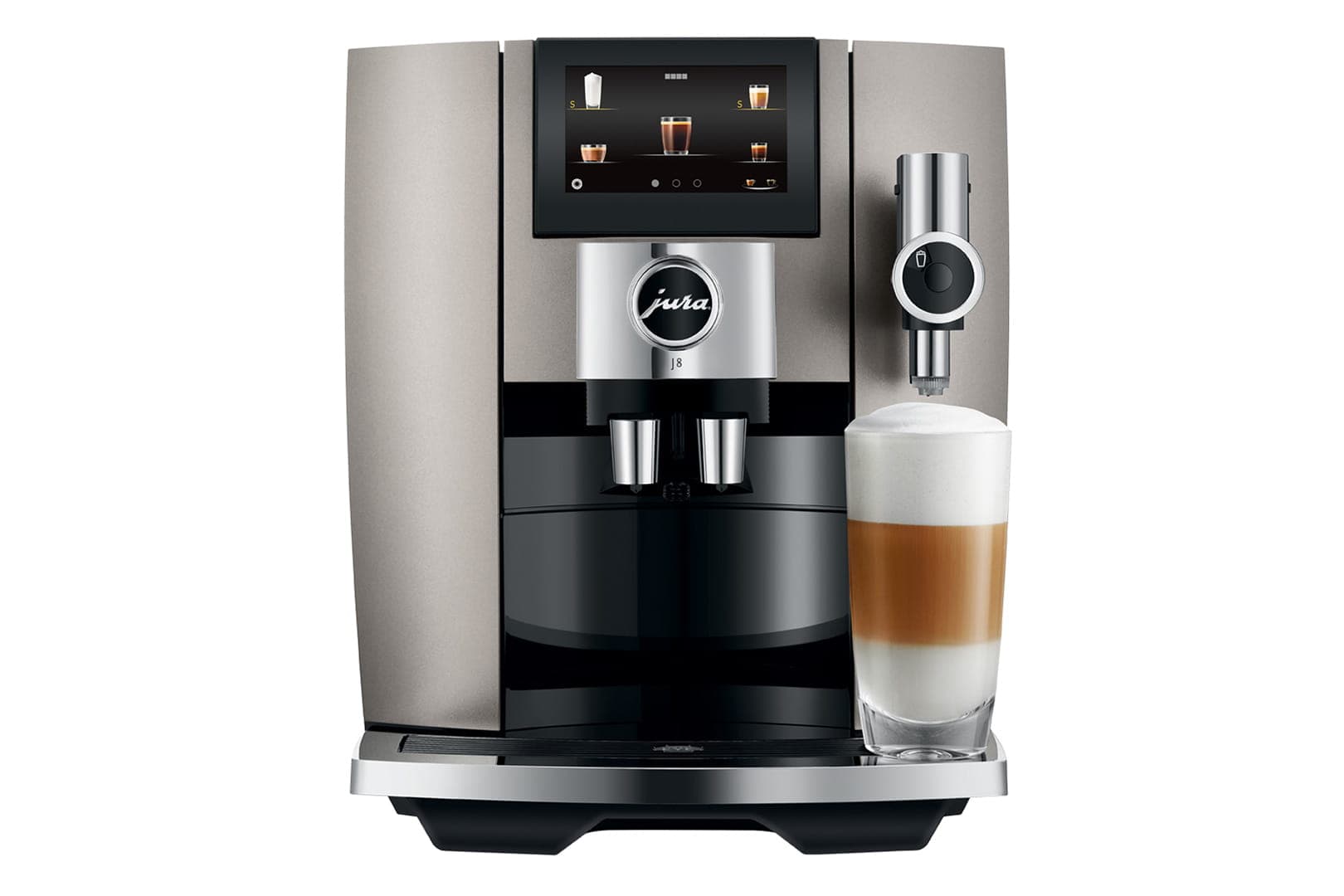
Bean-to-cup machines promise something extremely appealing:
freshly ground coffee without the work of making espresso manually.
Add beans, fill the water tank, press a button and the machine handles the grinding and brewing.
Spend more and it can also automatically prepare the milk for your cappuccino, latte or flat white.
But prices range from around £300 to well beyond £2,000, and paying more doesn't necessarily make sense for everybody.
We've compared the standout bean-to-cup machines currently available in the UK to help you decide where your money is best spent.
Best Bean-to-Cup Machines at a Glance
| Machine | Best For | Milk | Typical Price* |
|---|---|---|---|
| De'Longhi Rivelia | Best overall | Automatic | £600–£750 |
| De'Longhi Magnifica Start | Best budget | Manual or automatic | £300–£400 |
| De'Longhi Magnifica Evo Next | Best mid-range value | Automatic | £400–£650 |
| De'Longhi Eletta Explore | Best hot & cold | Automatic hot/cold | £800–£1,000 |
| JURA E8 | Best premium | Automatic | £1,295 |
| JURA ENA 4 | Best premium for black coffee | No automatic milk | £700–£800 |
*Typical pricing changes frequently.
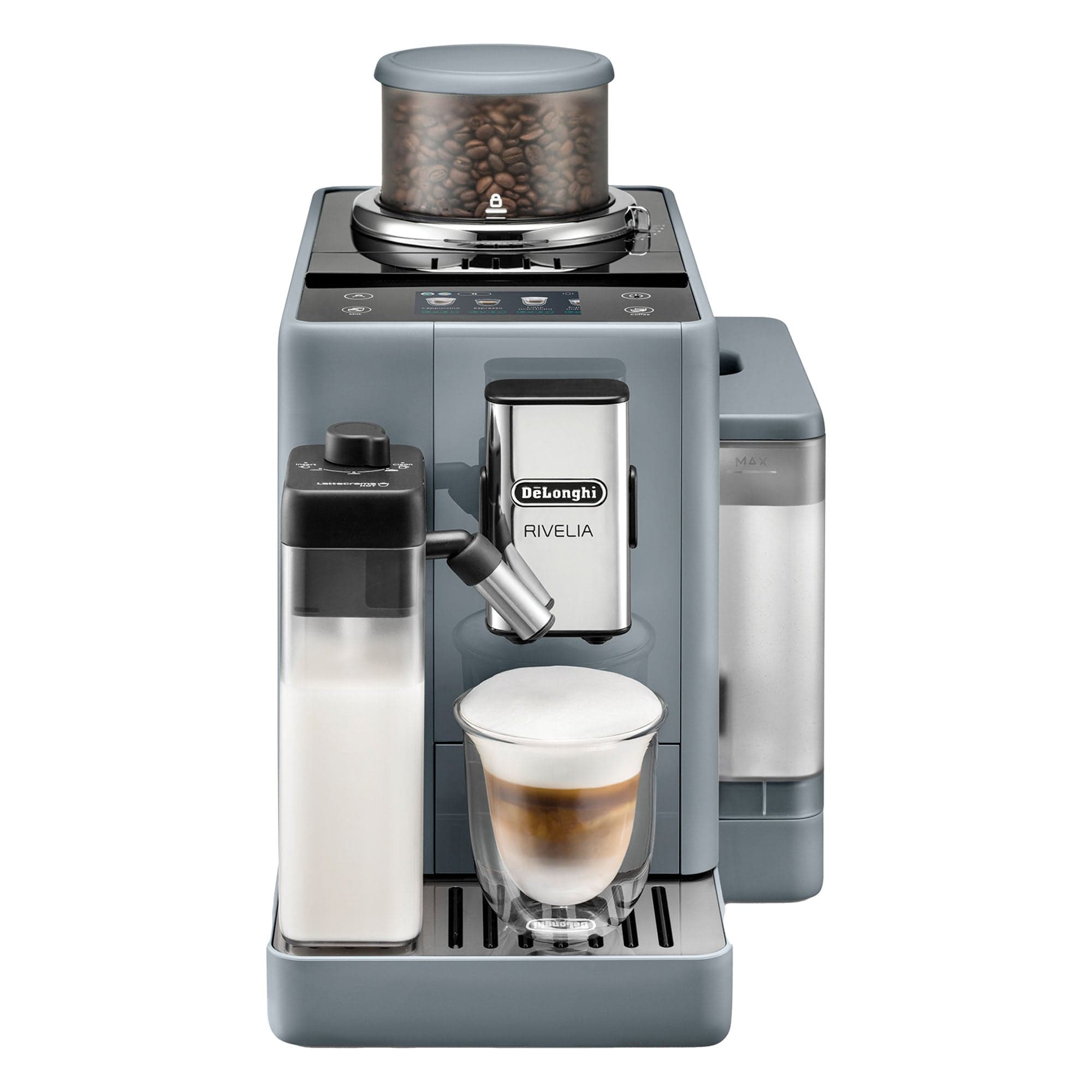
1. De'Longhi Rivelia — Best Bean-to-Cup Overall
Our verdict: ★★★★★Best for: Most householdsMilk: Automatic on LatteCrema versions
Rivelia is our starting point because it strikes a convincing balance between automation, size, drink choice and price.
The clever part is its interchangeable bean hopper system.
De'Longhi calls it Bean Switch, allowing users to swap between different beans without the usual process of emptying a fixed hopper.
That sounds like a minor feature until you live in a household where one person drinks decaf after lunch and another doesn't.
The current full Rivelia can also provide up to 16 customisable drinks and supports multiple user profiles.
What We Like
- Excellent one-touch experience
- Compact compared with many premium automatics
- Automatic milk
- Easy bean switching
- Attractive touchscreen
- Personalisation
What We'd Change
- Still expensive
- More machine than black-coffee drinkers need
- Several versions make the range confusing
Buy It If...
You want a premium-feeling automatic machine without moving into JURA-level pricing.
[READ FULL RIVELIA REVIEW]
[CHECK LATEST PRICE]
2. De'Longhi Magnifica Start — Best Budget Bean-to-Cup
Our verdict: ★★★★½Best for: First-time bean-to-cup buyers
The Magnifica Start is almost the opposite of Rivelia.
Forget colour touchscreens and dozens of recipes.
It's designed to get beans from the hopper into your cup with minimal complexity.
Current manual-milk models provide one-touch options including espresso, coffee and americano, while LatteCrema versions add greater milk automation.
At around the £300 mark when discounted, that's a compelling proposition.
Buy It If...
You're upgrading from pods and want to see whether bean-to-cup is worth it without spending £700.
[READ MAGNIFICA START REVIEW]
3. De'Longhi Magnifica Evo Next — Best Mid-Range Choice
Our verdict: ★★★★½Best for: More drinks without Rivelia pricing
The Magnifica family has expanded considerably.
The Evo Next moves beyond the basic Magnifica experience with a colour display and up to 13 one-touch coffee and milk drinks on current models.
That makes it an interesting halfway point:
Magnifica Start → Magnifica Evo/Next → Rivelia
The question isn't simply which machine is “better”.
It's whether you'll use the extra drinks, interface and milk functionality enough to justify the additional spend.
[READ MAGNIFICA EVO NEXT REVIEW]
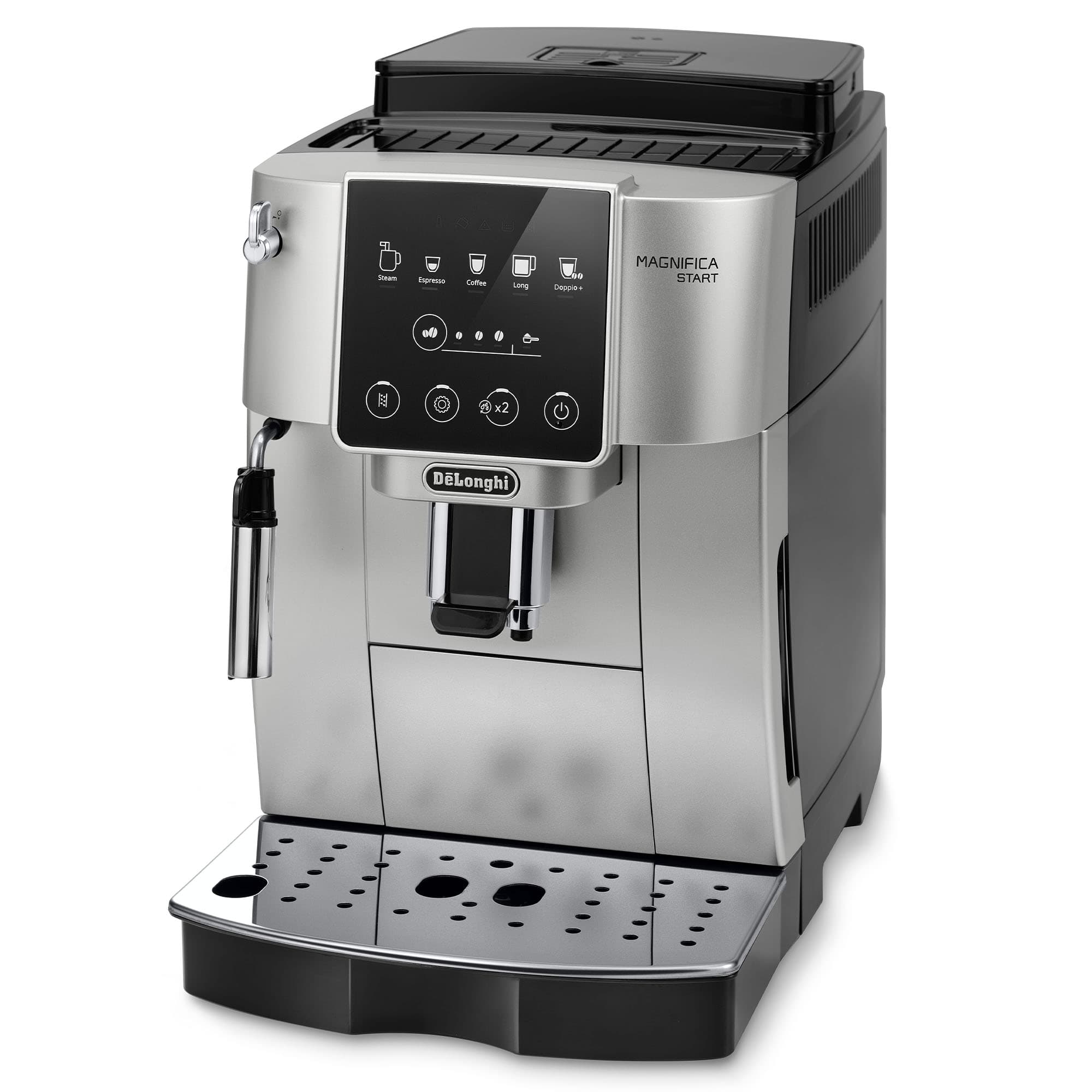
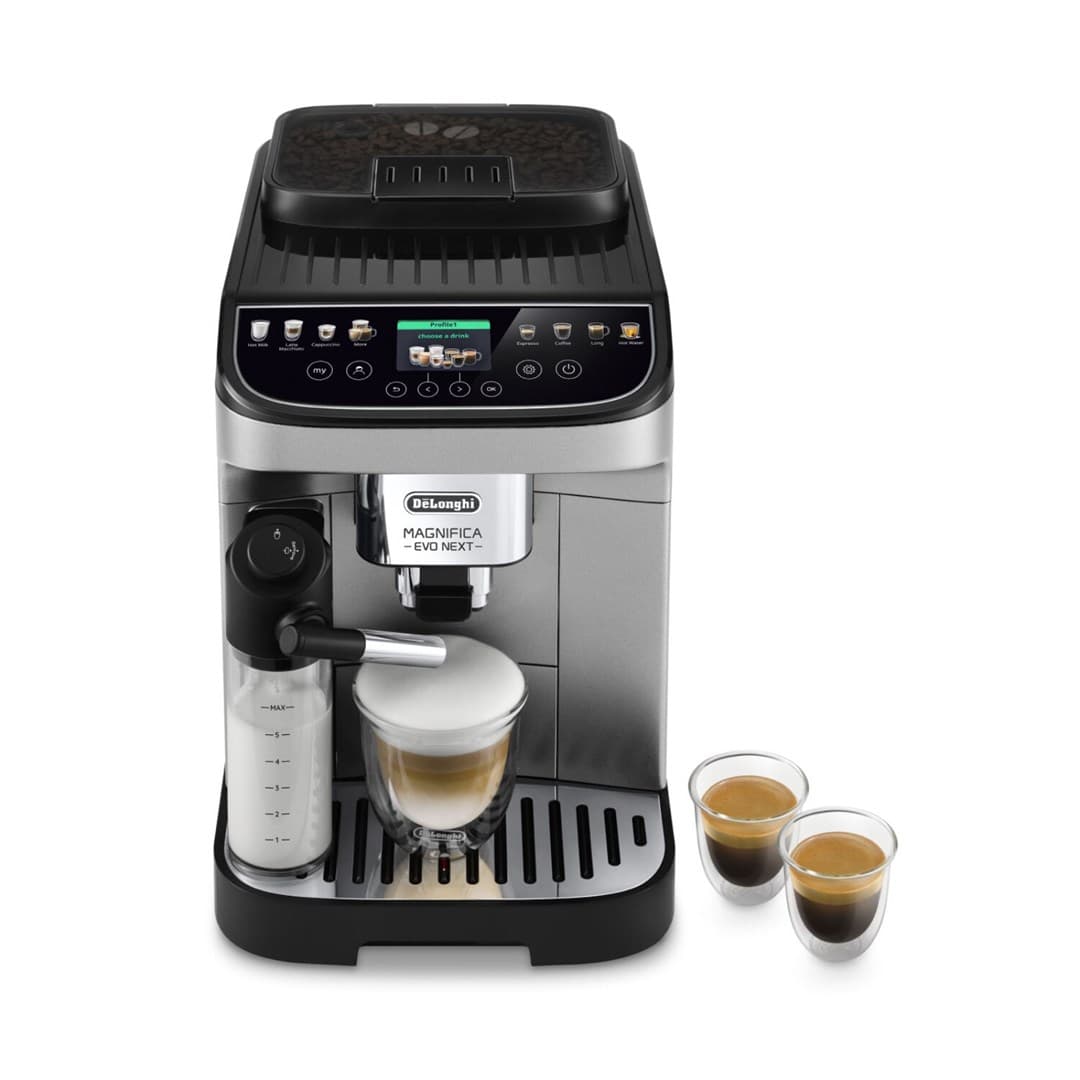
De’Longhi Magnifica Start vs De’Longhi Magnifica Evo Next
4. De'Longhi Eletta Explore — Best for Hot & Cold Coffee
Our verdict: ★★★★½Best for: Iced-coffee households
Eletta Explore is the machine I'd consider if you genuinely drink cold coffee as often as hot coffee.
Current models combine hot and cool milk functionality with De'Longhi's Cold Extraction technology and a broad menu of drinks.
It's not cheap.
But its versatility is much easier to justify if you'd otherwise own separate equipment for different drinks.
Buy It If...
You regularly make iced lattes, cold coffee and milk drinks as well as conventional espresso drinks.
[READ ELETTA EXPLORE REVIEW]
5. JURA E8 — Best Premium Bean-to-Cup
Our verdict: ★★★★½Best for: Premium automation
The fifth-generation E8 is a serious automatic coffee machine.
JURA's current model offers 27 specialities, including its Hot Brew, Light Brew and Sweet Foam categories, alongside a P.A.G.2 grinder and 3.5-inch display.
At £1,295 from JURA UK, this isn't a value proposition in the traditional sense.
It's for buyers who value automation, build, interface and the overall ownership experience enough to pay for them.
[READ JURA E8 REVIEW]
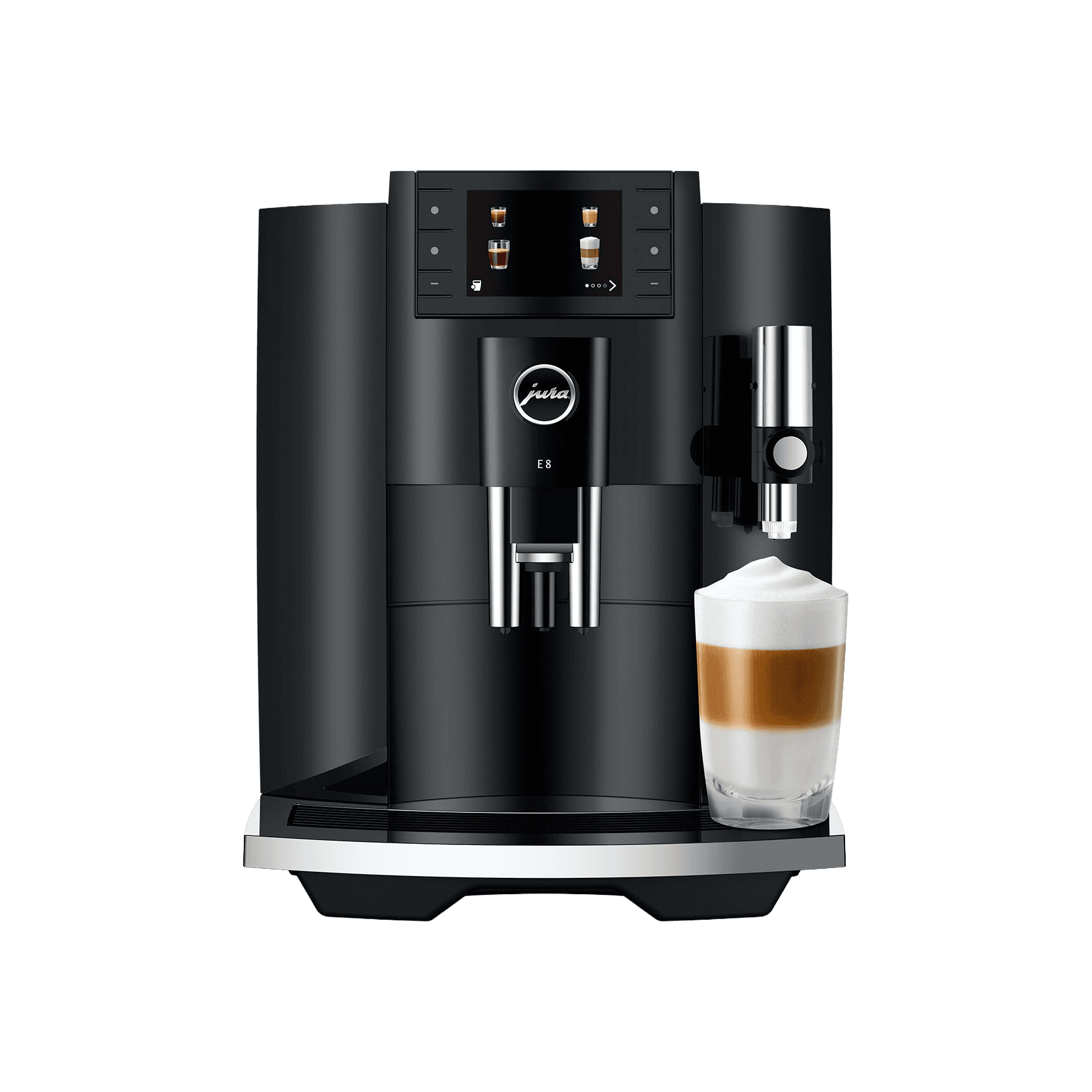
JURA E8 vs De’Longhi Rivelia
6. JURA ENA 4 — Best Premium Machine for Black Coffee
If your daily routine consists of espresso, coffee and americano rather than endless milk drinks, don't pay for an elaborate milk system you won't use.
The ENA 4 represents a simpler route into JURA ownership.
It deserves consideration for buyers who value premium automatic black coffee but don't need one-touch latte functionality.
[READ JURA ENA 4 REVIEW]
How Does a Bean-to-Cup Machine Work?
A bean-to-cup machine combines several pieces of coffee equipment.
Typically it:
- stores whole coffee beans;
- grinds the required quantity;
- doses the ground coffee;
- compresses it;
- extracts the coffee;
- ejects the used coffee puck.
Automatic milk models can then prepare and dispense milk or foam.
That makes them fundamentally different from traditional espresso machines, where you perform more of these stages yourself.
Manual vs Automatic Milk
This decision can save you hundreds of pounds.
Manual Milk Frother
You steam the milk yourself.
Advantages: More control and usually cheaper.
Disadvantages: Requires technique and cleaning after use.
Automatic Milk System
The machine prepares the milk for you.
Advantages: One-touch cappuccinos and lattes.
Disadvantages: Higher purchase price and additional milk-system cleaning.
If you make several milk drinks every day, automatic milk can be worth paying for.
If you drink mostly americanos, probably not.
How Much Should You Spend?
£250–£400
Entry-level bean-to-cup.
Look at machines such as the Magnifica Start.
£400–£700
The sweet spot for many households.
You'll find better interfaces, more drinks and improved milk automation.
£700–£1,000
Premium automatic territory with extensive drink menus and stronger interfaces.
£1,000+
JURA and other premium machines become increasingly prominent.
You're paying heavily for refinement, automation, construction and features.
Bean-to-Cup vs Espresso Machine
Choose bean-to-cup if:
- convenience matters;
- multiple people use the machine;
- you want repeatability;
- you don't want to learn espresso technique.
Choose espresso if:
- you enjoy making coffee;
- you want control;
- you want to experiment with extraction;
- milk texturing is part of the fun.
→ Read: Bean-to-Cup vs Espresso Machines
Bean-to-Cup vs Pods
Pods win on absolute convenience.
Bean-to-cup wins on:
- using fresh beans;
- adjusting grind and strength;
- avoiding proprietary coffee capsules;
- greater coffee choice.
Running-cost differences depend heavily on the beans and capsules you buy.
→ Read: Bean-to-Cup vs Pod Coffee Machines
What to Look For
Grinder
Look at adjustment and consistency, not marketing claims about enormous numbers of settings.
Milk System
Decide whether you genuinely need automatic milk.
Water Tank
A tiny tank becomes irritating in a household making several drinks daily.
Bean Hopper
Capacity matters, but freshness matters too. Bigger isn't automatically better.
Removable Brewing Unit
Consider how the internal brewing system is cleaned and maintained.
Drink Personalisation
Useful if several people want different strengths and volumes.
Dimensions
Measure your worktop before buying, including depth and clearance above the machine.
FAQs
What is the best bean-to-cup coffee machine?
For most buyers, the De'Longhi Rivelia offers an excellent balance of automation, features and size. The Magnifica Start is a stronger choice for tighter budgets, while the JURA E8 targets premium buyers.
Is bean-to-cup coffee better than pods?
Bean-to-cup machines use freshly ground beans and offer much greater coffee choice. Pod machines are simpler and usually cheaper upfront.
Are bean-to-cup machines difficult to clean?
They require regular maintenance, including emptying grounds and drip trays, cleaning milk systems and periodic descaling. Automatic cleaning programmes make the process easier but don't eliminate it.
How long does a bean-to-cup machine last?
There isn't a useful universal lifespan. Maintenance, usage, water hardness, construction and repairability all matter.
Do bean-to-cup machines make proper espresso?
They produce espresso-style drinks automatically, but enthusiasts seeking maximum control over grinding, dosing and extraction may prefer a traditional espresso setup.
Compare Bean-to-Cup Machines
Still undecided?
Use our Coffee Machine Finder or read the full reviews before buying.