A bean-to-cup machine makes coffee for you.
An espresso machine lets you make the coffee.
That's the appeal.
You get greater control over grinding, dosing, extraction and milk — and potentially a much more rewarding route to genuinely excellent coffee at home.
But there's also more to learn.
We've selected the espresso machines we'd currently put on a UK shortlist, from compact beginner machines through to sophisticated assisted systems.
Best Espresso Machines at a Glance
| Machine | Best For | Grinder | Skill Level |
|---|---|---|---|
| Ninja Luxe Café | Best overall assisted machine | Built in | Beginner–Intermediate |
| Sage Bambino Plus | Best compact | Separate | Beginner |
| Sage Barista Express Impress | Best all-in-one | Built in | Beginner–Intermediate |
| Sage Barista Touch Impress | Best premium assisted | Built in | Beginner |
| De'Longhi La Specialista Opera | Best De'Longhi | Built in | Intermediate |
| Gaggia Classic E24 | Best traditional enthusiast option | Separate | Intermediate+ |
| Sage Oracle Jet | Best premium home barista machine | Built in | Beginner–Enthusiast |
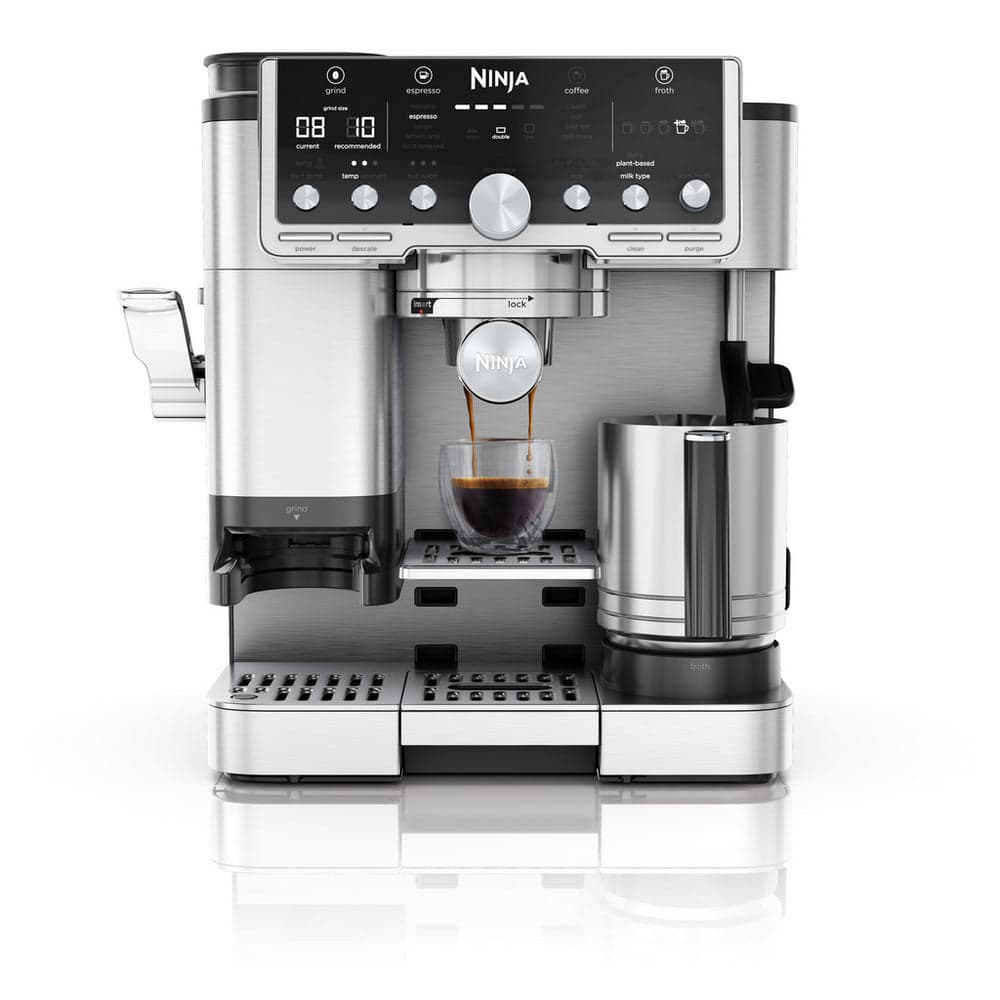
1. Ninja Luxe Café — Best Espresso Machine for Most People
Best for: Espresso without unnecessary frustrationGrinder: Built inVerdict: ★★★★★
The problem with recommending a traditional espresso machine to everybody is that many people don't actually want another hobby.
They want excellent coffee.
The Ninja Luxe Café addresses that by assisting with several of the difficult variables involved in espresso preparation while retaining more of the coffee-making experience than a fully automatic bean-to-cup machine.
That makes it one of the most interesting choices for somebody upgrading from pods or an automatic machine.
Pros
- Integrated grinder
- Assisted setup
- Easier learning curve
- Strong milk-drink proposition
- More involvement than bean-to-cup
- Versatile
Cons
- Large footprint
- More work than an automatic
- Enthusiasts may eventually want more manual control
Buy It If...
You want the satisfaction of making coffee without spending three months learning why your espresso ran in 14 seconds.
[READ NINJA LUXE CAFÉ REVIEW]
2. Sage Bambino Plus — Best Compact Espresso Machine
Best for: Small kitchensGrinder: SeparateVerdict: ★★★★½
The Bambino Plus is one of the easiest recommendations for someone who wants a compact espresso setup.
Instead of integrating a grinder, Sage concentrates the machine on espresso and milk.
That gives you flexibility to choose your own grinder — a significant advantage if you become more serious about coffee.
Pros
- Small footprint
- Quick workflow
- Capable milk system
- Easy route into espresso
- Lets you choose your own grinder
Cons
- Grinder adds to total cost
- Less convenient than an integrated system
- Requires more learning than automatic coffee
Buy It If...
You want proper espresso but don't want an enormous appliance dominating the kitchen.
[READ SAGE BAMBINO PLUS REVIEW]
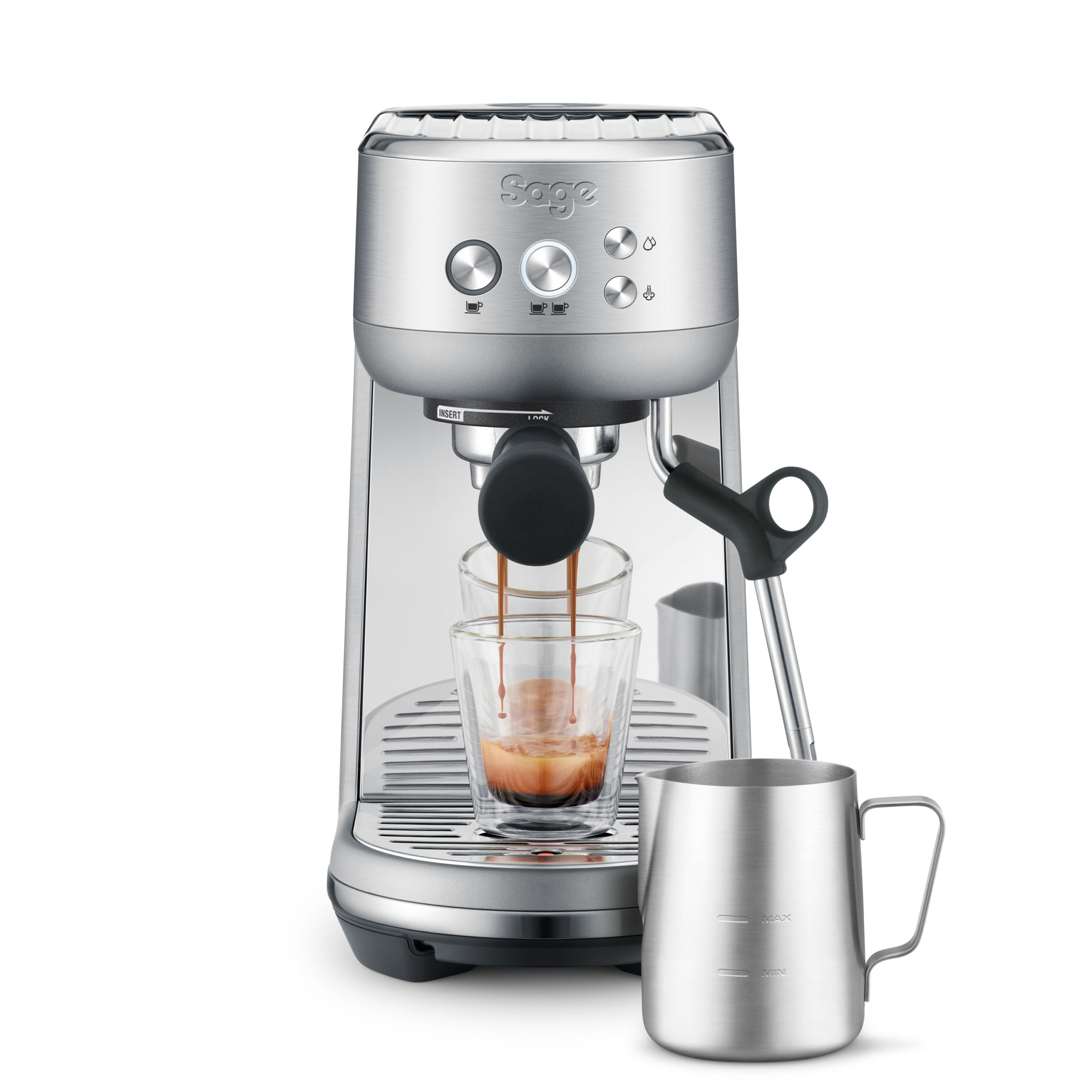
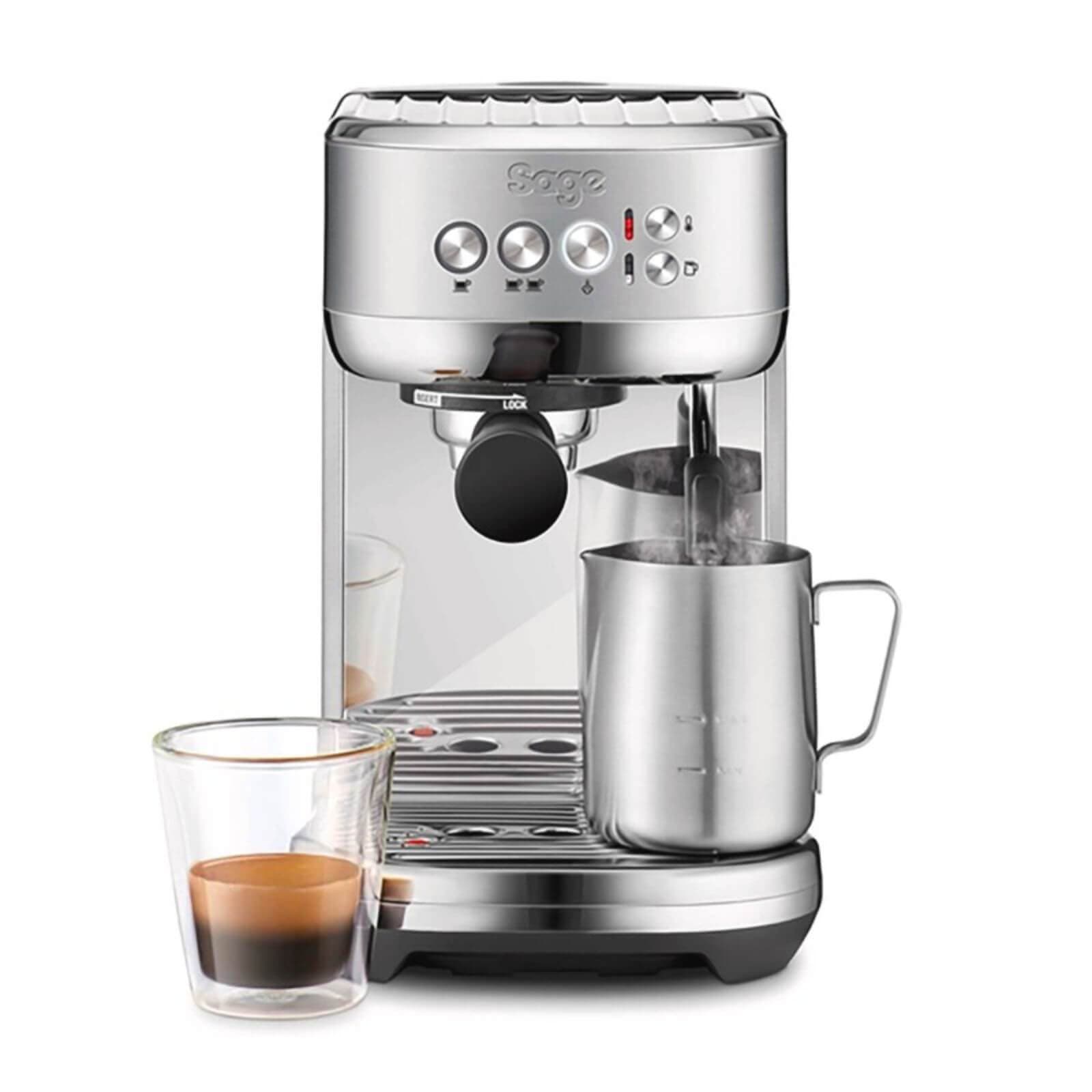
Sage Bambino vs Sage Bambino Plus
3. Sage Barista Express Impress — Best All-in-One for Learning
Best for: Aspiring home baristasGrinder: Built inVerdict: ★★★★½
The Barista Express formula is simple:
espresso machine + grinder = one appliance.
The Impress version makes dosing and tamping easier, reducing two areas where beginners frequently struggle.
You still grind beans, use a portafilter and texture milk, so it feels like making espresso rather than pressing a drinks icon.
That's precisely its appeal.
Pros
- Integrated grinder
- Assisted dosing
- Assisted tamping
- Good learning platform
- Proper portafilter workflow
- Strong all-in-one package
Cons
- Larger than Bambino
- Integrated grinder limits future grinder upgrades
- Requires practice
[READ BARISTA EXPRESS IMPRESS REVIEW]
4. Sage Barista Touch Impress — Best Premium Assisted Espresso
Best for: Convenience without going fully automaticGrinder: Built inVerdict: ★★★★½
The Touch Impress takes the assisted concept considerably further.
It's aimed at someone who likes the idea of home espresso but wants the machine to guide them through much of the process.
That puts it in an interesting position between traditional espresso and bean-to-cup.
You're still using a portafilter.
You're still making espresso.
But the machine removes more opportunities to get things badly wrong.
Pros
- Guided workflow
- Integrated grinder
- Assisted preparation
- Strong milk automation
- Attractive interface
Cons
- Expensive
- Less hands-on than traditional espresso
- Serious enthusiasts may prefer separate grinder and machine
[READ BARISTA TOUCH IMPRESS REVIEW]
5. De'Longhi La Specialista Opera — Best De'Longhi Espresso Machine
Best for: Feature-rich manual coffeeGrinder: Built inTypical manufacturer price: £799.99Verdict: ★★★★½
The La Specialista range is De'Longhi's answer to the integrated-grinder home espresso market.
The current Opera combines a grinder with active temperature control, dynamic pre-infusion and multiple drink options. De'Longhi currently lists it at £799.99 in the UK.
It makes particular sense for buyers attracted to De'Longhi's ecosystem but wanting greater involvement than a Rivelia or Magnifica provides.
[READ LA SPECIALISTA OPERA REVIEW]
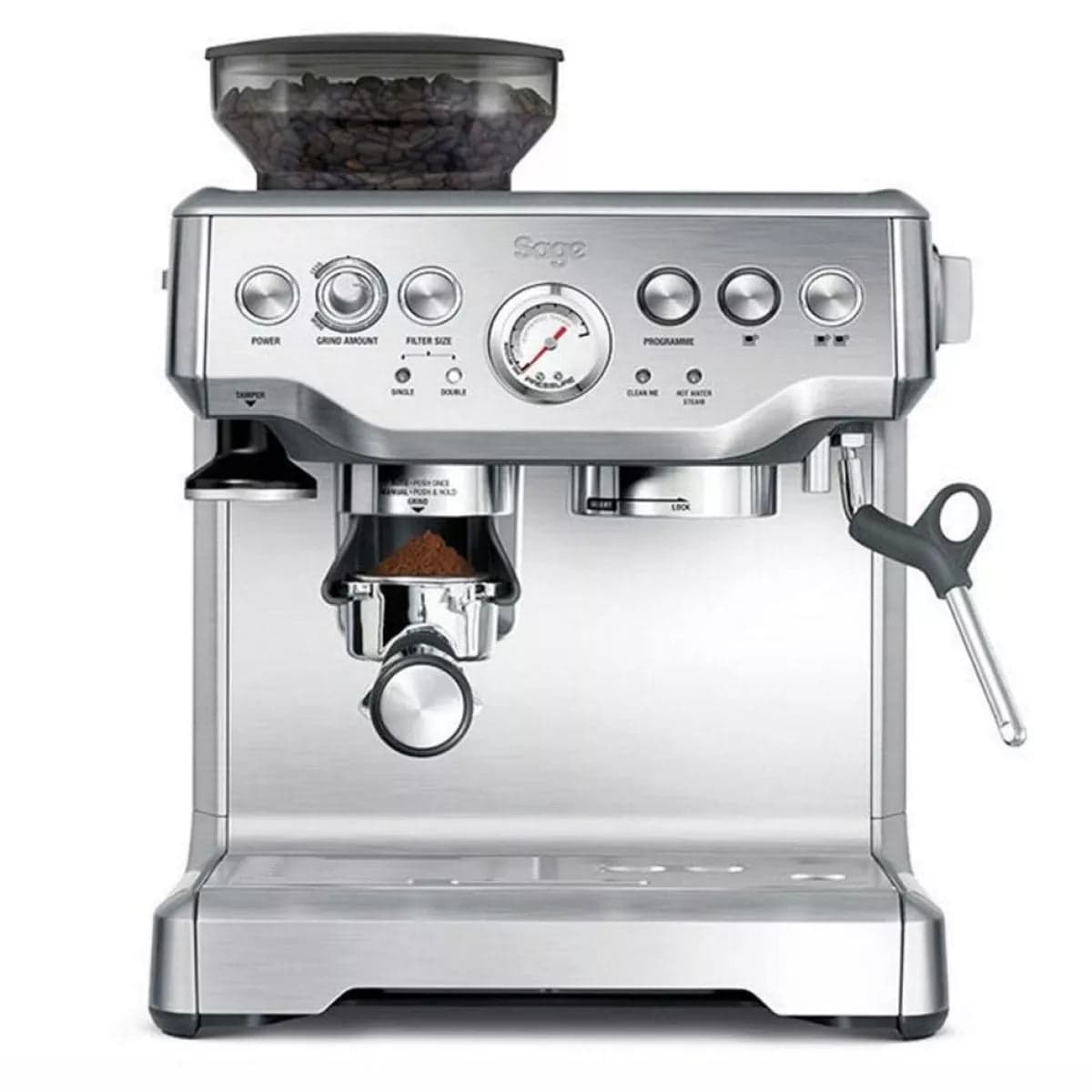
La Specialista vs Sage Barista Express
6. Gaggia Classic E24 — Best Traditional Enthusiast Machine
Best for: Learning proper espressoGrinder: SeparateVerdict: ★★★★½
The Gaggia Classic has been a gateway into home espresso for years.
It takes a fundamentally different approach from touchscreen-assisted machines.
There are fewer systems trying to protect you from mistakes.
That's both the attraction and the downside.
Pair it with a capable espresso grinder and learn how dose, grind and extraction interact, and it's the sort of machine that can teach you considerably more about espresso.
Pros
- Traditional espresso experience
- Established platform
- Simple approach
- Strong enthusiast community
- Separate grinder can be upgraded independently
Cons
- Greater learning curve
- Grinder required
- Less convenient
- Not the best choice for someone wanting automatic drinks
[READ GAGGIA CLASSIC E24 REVIEW]
7. Sage Oracle Jet — Best Premium Assisted Espresso Machine
Best for: High-budget buyers who want assistance and controlGrinder: Built inVerdict: ★★★★½
The Oracle concept is essentially:
How much of the difficult work can a machine automate while still retaining the portafilter espresso experience?
It's a premium proposition.
But it occupies an interesting position for people considering expensive bean-to-cup machines who would actually prefer the ritual and flexibility of espresso.
Buy It If...
You have a large budget and want sophisticated assistance without abandoning the espresso workflow entirely.
[READ SAGE ORACLE JET REVIEW]
What Is an Espresso Machine?
A traditional espresso setup pushes heated water through finely ground coffee under pressure.
But making good espresso requires several variables to work together:
- fresh coffee;
- correct grind;
- dose;
- distribution;
- tamp;
- water temperature;
- extraction time;
- brew ratio.
Modern assisted machines automate or guide some of those stages.
That's why two machines both described as “espresso machines” can provide dramatically different experiences.
Do You Need a Grinder?
If your machine doesn't contain one:
Yes, ideally.
Buying freshly roasted whole beans and grinding immediately before brewing gives you much greater control than relying on pre-ground coffee.
And the grinder matters enormously.
A £500 espresso machine paired with an unsuitable grinder can be more frustrating than a cheaper machine with a capable espresso grinder.
We'll be building a dedicated Best Coffee Grinders for Espresso guide around this.
Integrated vs Separate Grinder
Integrated
Advantages
- One appliance
- Convenient
- Less clutter
- Easier starting point
Disadvantages
- Harder to upgrade independently
- If the grinder becomes the limiting factor, you're stuck with it
Separate
Advantages
- Greater choice
- Easy to upgrade
- Can achieve better grinding performance
Disadvantages
- More expensive overall
- Takes more space
- More decisions to make
Espresso Machine vs Bean-to-Cup
This is probably the most important decision on the site.
Buy an espresso machine if:
You enjoy the process.
You want control.
You want to learn.
You want to experiment with different beans.
Buy bean-to-cup if:
You want speed.
Several people use the machine.
You want repeatable results.
You don't want to think about grind, dose or extraction.
[READ: BEAN-TO-CUP VS ESPRESSO MACHINES]
What Should You Spend?
Under £200
Entry-level manual machines.
Budget for a grinder too.
£200–£500
Excellent compact machines and capable traditional espresso equipment.
£500–£800
Integrated grinders and increasingly sophisticated assistance.
£800–£1,500+
Premium assisted espresso and prosumer-style machines.
Remember:
£1,000 spent intelligently on machine + grinder can make more sense than £1,000 spent entirely on the machine.
What About 15-Bar and 20-Bar Pumps?
Don't buy an espresso machine simply because the box advertises a huge pressure number.
Pump pressure is not a useful standalone measure of coffee quality.
A machine advertising 20 bar isn't automatically better than one advertising 15 bar.
Extraction quality depends on the overall brewing system and how the coffee is prepared.
We'll cover this properly in our How Many Bars Does an Espresso Machine Need? guide.
Best Espresso Machine for Beginners
There are two ways to answer this.
If you want the machine to help you:
Ninja Luxe Café or an assisted Sage machine.
If you want to actually learn espresso:
Sage Bambino Plus + a capable grinder is a very attractive starting point.
They're different approaches to the same problem.
Best Espresso Machine for Lattes
Milk changes the equation.
For frequent lattes and cappuccinos, consider:
- steam performance;
- automatic vs manual milk;
- heat-up/recovery time;
- ease of cleaning;
- pitcher clearance.
Don't choose based on espresso specifications alone.
→ Best Coffee Machines for Lattes
FAQs
What is the best espresso machine for home?
It depends on how involved you want to be. The Ninja Luxe Café suits buyers wanting assistance, the Bambino Plus provides a compact traditional route and the Barista Express Impress combines grinder and espresso machine in one appliance.
Is Sage worth the money?
Sage occupies a strong position in the UK home-espresso market because its range covers compact manual machines through to heavily assisted premium models. Whether the premium is worthwhile depends on which features you'll use.
Is a separate grinder better?
It gives you more flexibility and makes future upgrades easier. An integrated grinder is considerably more convenient.
Can a home espresso machine make coffee-shop-quality coffee?
Capable equipment can produce excellent espresso, but beans, grinder quality and technique matter as much as the machine itself.
Is espresso difficult to learn?
Basic espresso isn't especially difficult, but consistency takes practice. Assisted machines reduce the learning curve substantially.
Find Your Espresso Machine
Choose based on how much involvement you actually want, not how professional the machine looks.
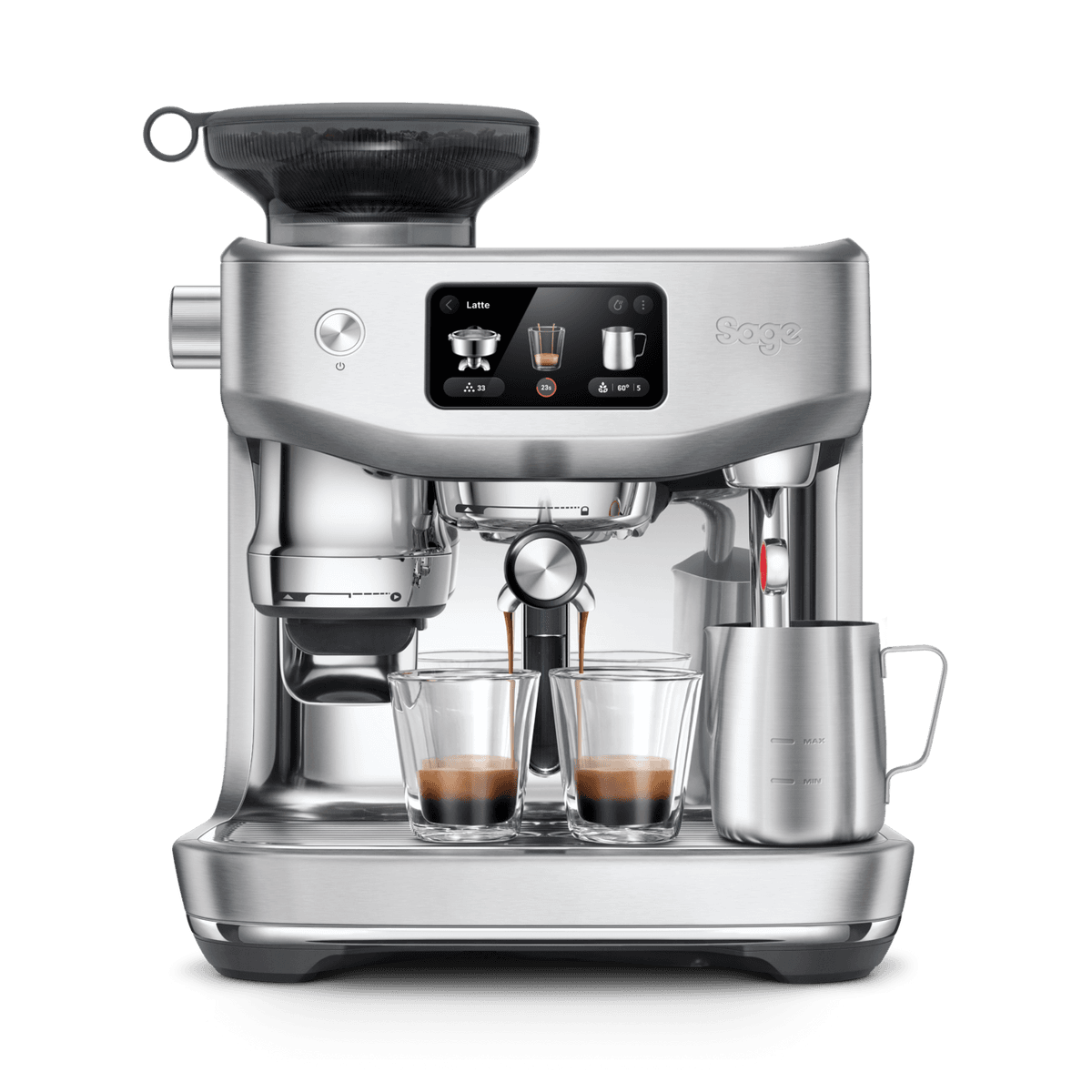
Sage Oracle Jet vs Ninja Luxe Café Pro
Or use our Coffee Machine Finder to compare espresso and automatic options based on your budget and favourite drinks.