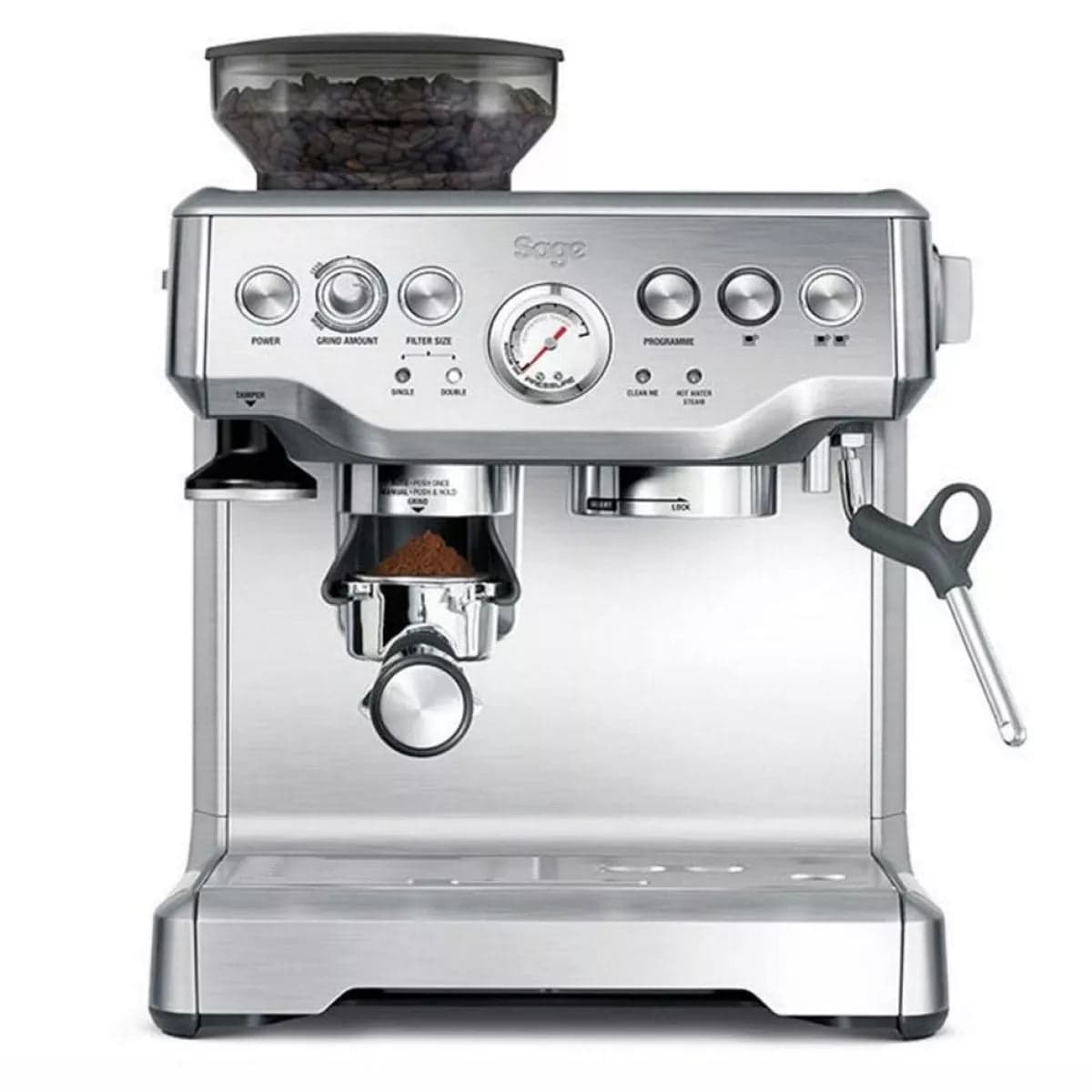
Few home espresso machines have been as influential as the Sage Barista Express.
For years, it has been the obvious recommendation for somebody saying:
“I want to make proper coffee at home, but I don't want to buy a separate grinder.”
The formula is familiar.
Integrated grinder.
Portafilter.
Pressure gauge.
Steam wand.
Everything required to start making espresso in one substantial stainless-steel machine.
But the market has changed.
Sage itself now sells Express Impress, Barista Pro, Touch Impress and Oracle Jet.
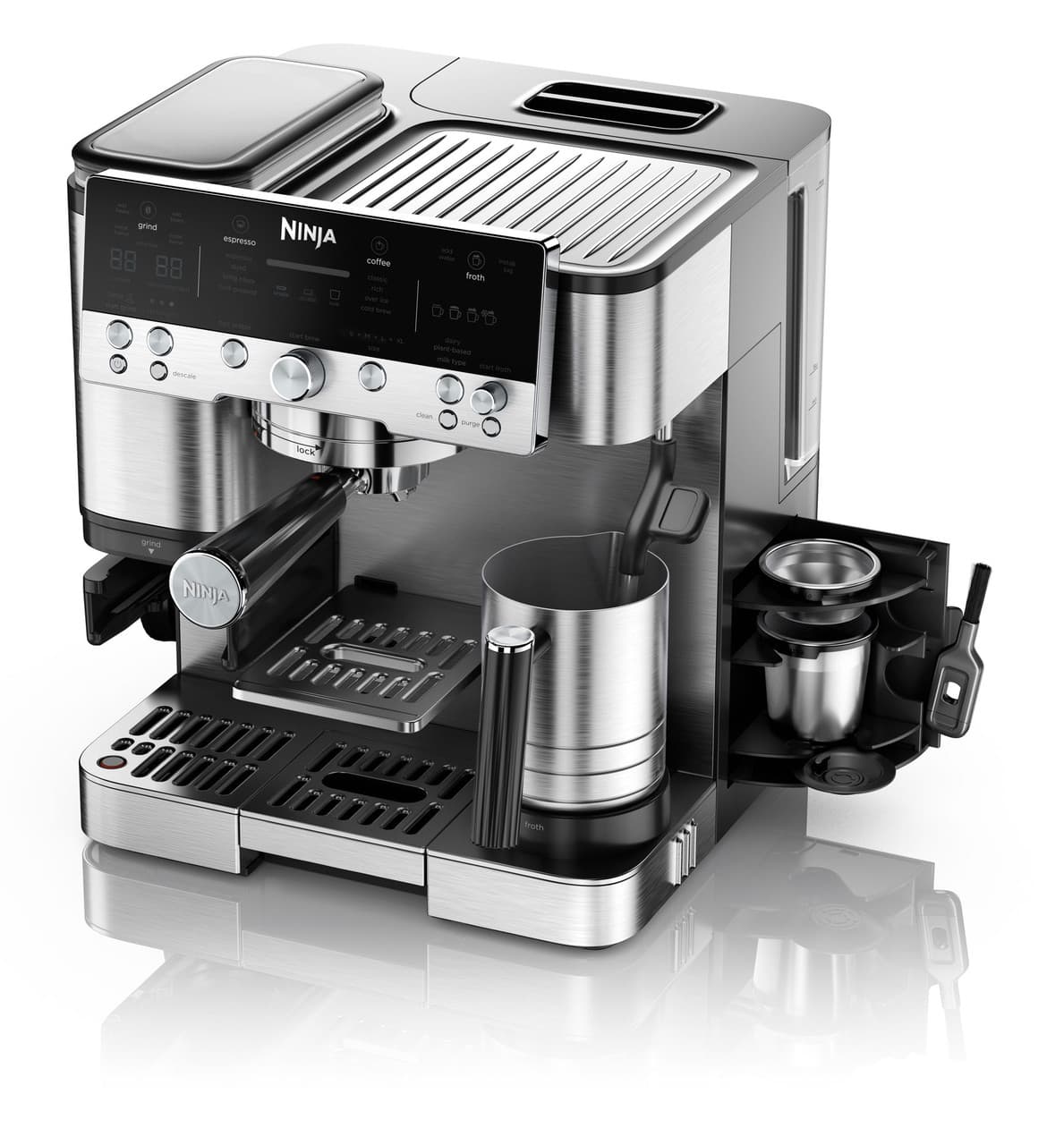
Ninja Luxe Café provides far more assistance.
De’Longhi's La Specialista range has become much stronger.
So is the original Barista Express still worth buying?
Yes.
But we'd be much more price-sensitive than we were a few years ago.
Coffee Machine Reviews Verdict
Overall: 8.9/10
| Category | Score |
|---|---|
| Coffee Quality | 9.2/10 |
| Ease of Use | 8.3/10 |
| Milk Drinks | 9.0/10 |
| Grinder | 8.6/10 |
| Build & Design | 9.1/10 |
| Features | 8.1/10 |
| Value for Money | 9.2/10 when discounted |
Best for: Buyers wanting a proven all-in-one manual espresso machine at a strong price.
Avoid if: You want assistance with dosing, tamping or milk.
Machine type: Manual espresso machine with integrated grinder
Built-in grinder: Yes
Portafilter: 54mm
Milk: Manual steam wand
Our verdict: Still a superb gateway into home espresso, but newer machines are easier. The Barista Express is now most compelling when the price is excellent.
Sage Barista Express
Retailer prices can change. Search current listings for this machine.
Find retailer pricesSage Barista Express Pros and Cons
Pros
- Proven design
- Integrated burr grinder
- Proper portafilter workflow
- Pressure gauge
- PID temperature control
- Manual steam wand
- Strong espresso potential
- Huge ownership community
- Plenty of accessories available
- Frequently discounted
Cons
- Slower heating than newer Sage machines
- Manual dosing requires practice
- Manual tamping
- Manual milk
- Older grinder architecture
- No touchscreen
- No guided workflow
- Express Impress is easier
Why Has Barista Express Been So Popular?
Because it solved an obvious problem.
Traditional home espresso required buying:
espresso machine + grinder.
That immediately made the process more complicated and expensive.
Barista Express combined the two.
For somebody walking away from capsules and wanting to use fresh beans, that made espresso far more approachable.
Is It Bean-to-Cup?
No.
This distinction matters.
Barista Express has a bean hopper and grinder.
But that doesn't make it an automatic bean-to-cup machine.
The grinder deposits coffee into the portafilter.
You then:
- distribute it;
- tamp it;
- lock it into the group;
- brew;
- remove the puck;
- steam milk separately.
That's manual espresso.
The grinder simply happens to be built into the same machine.
Integrated Grinder
The built-in conical burr grinder grinds directly into the portafilter.
Dose can be adjusted.
Grind size can be adjusted.
This gives you the basic tools required to dial in different coffee beans.
The grinder is no longer the most sophisticated integrated grinder Sage offers.
But it remains perfectly capable of introducing someone to espresso.
54mm Portafilter
The Barista Express uses Sage's 54mm portafilter.
This accommodates the dose Sage has designed the machine around and gives you a genuine espresso-puck preparation process.
The machine also typically comes with both single-wall and dual-wall filter baskets.
That's useful for beginners.
Dual-wall baskets are more forgiving.
Single-wall baskets give you greater control once your grinder and technique improve.
Pressure Gauge
One of the Barista Express's most recognisable features is its analogue pressure gauge.
It's useful feedback.
But don't obsess over putting the needle in a particular place while ignoring taste and extraction behaviour.
Espresso isn't a video game where the gauge entering a marked zone guarantees delicious coffee.
Use it as information.
PID Temperature Control
Digital temperature control helps maintain appropriate water temperature during extraction.
Again, consistency matters.
Good espresso requires control over multiple variables.
Sage gives you a stable platform and then expects you to learn how those variables interact.
Espresso Quality
Potentially excellent for the money.
Fresh beans matter enormously.
So does grinder adjustment.
So does dose.
So does puck preparation.
The machine can produce poor espresso.
It can also produce very good espresso.
The difference is often the person using it.
That's both the strength and weakness of manual coffee equipment.
Steam Wand
Milk is completely manual.
You'll need to learn how to:
- purge the wand;
- introduce air;
- create a vortex;
- texture the milk;
- stop at the correct temperature;
- wipe and purge afterwards.
Initially, this feels difficult.
Eventually, it becomes muscle memory.
Flat White
Once you've learnt milk steaming, Barista Express can make an excellent flat white.
You have much more control over milk texture than you get from a basic automatic milk carafe.
But there's no automatic safety net.
Your first flat white may look nothing like the one from your favourite café.
That's part of learning.
Cappuccino
Same story.
You can intentionally introduce more air to create thicker cappuccino foam.
The machine isn't deciding what “cappuccino” means.
You are.
For coffee enthusiasts, that's a feature.
Heat-Up Time
This is one area where Barista Express feels older.
Newer Sage ThermoJet machines become ready remarkably quickly.
Barista Express uses Sage's older Thermocoil-style heating architecture.
It's not painfully slow.
But Barista Pro is noticeably more immediate.
If you're making coffee in a rush every morning, that difference matters.
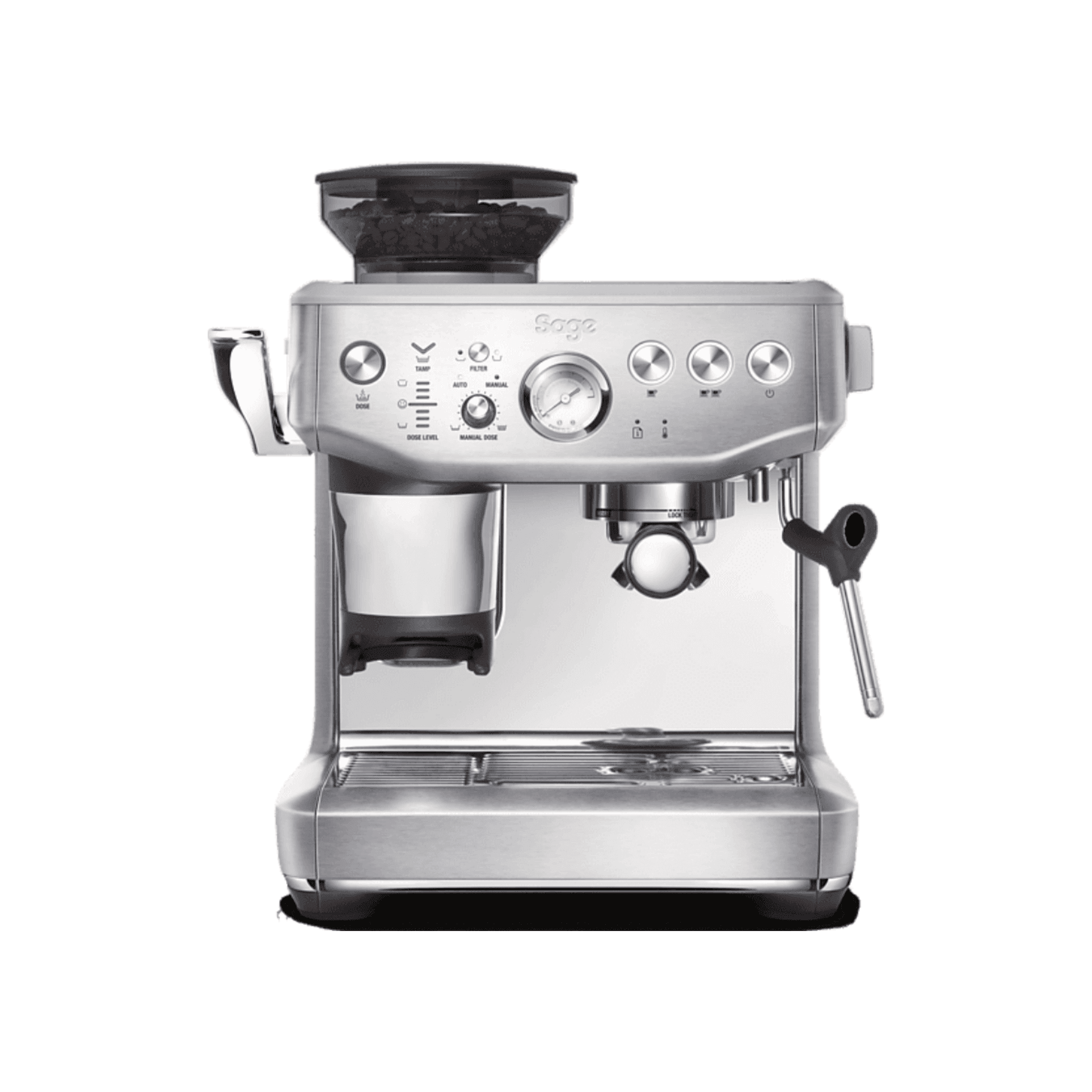
Barista Express vs Barista Express Impress
This is probably the most important comparison.
Express
You manually:
- manage dose;
- tamp;
- correct mistakes.
Express Impress
The machine adds:
- intelligent dosing;
- dose feedback;
- assisted tamping;
- puck-preparation guidance.
If you're nervous about espresso, Impress is easier.
If you want to learn everything yourself — or Express is dramatically cheaper — the original remains attractive.
BARISTA EXPRESS VS EXPRESS IMPRESS
Sage Barista Express
8.9/10 editorial score
- Built-in grinder
- Yes
- Portafilter
- 54mm
- Milk
- Manual steam wand
Sage Barista Express Impress
9.1/10 editorial score
- Built-in grinder
- Yes — 25 settings
- Tamping
- Assisted
- Milk
- Manual steam wand
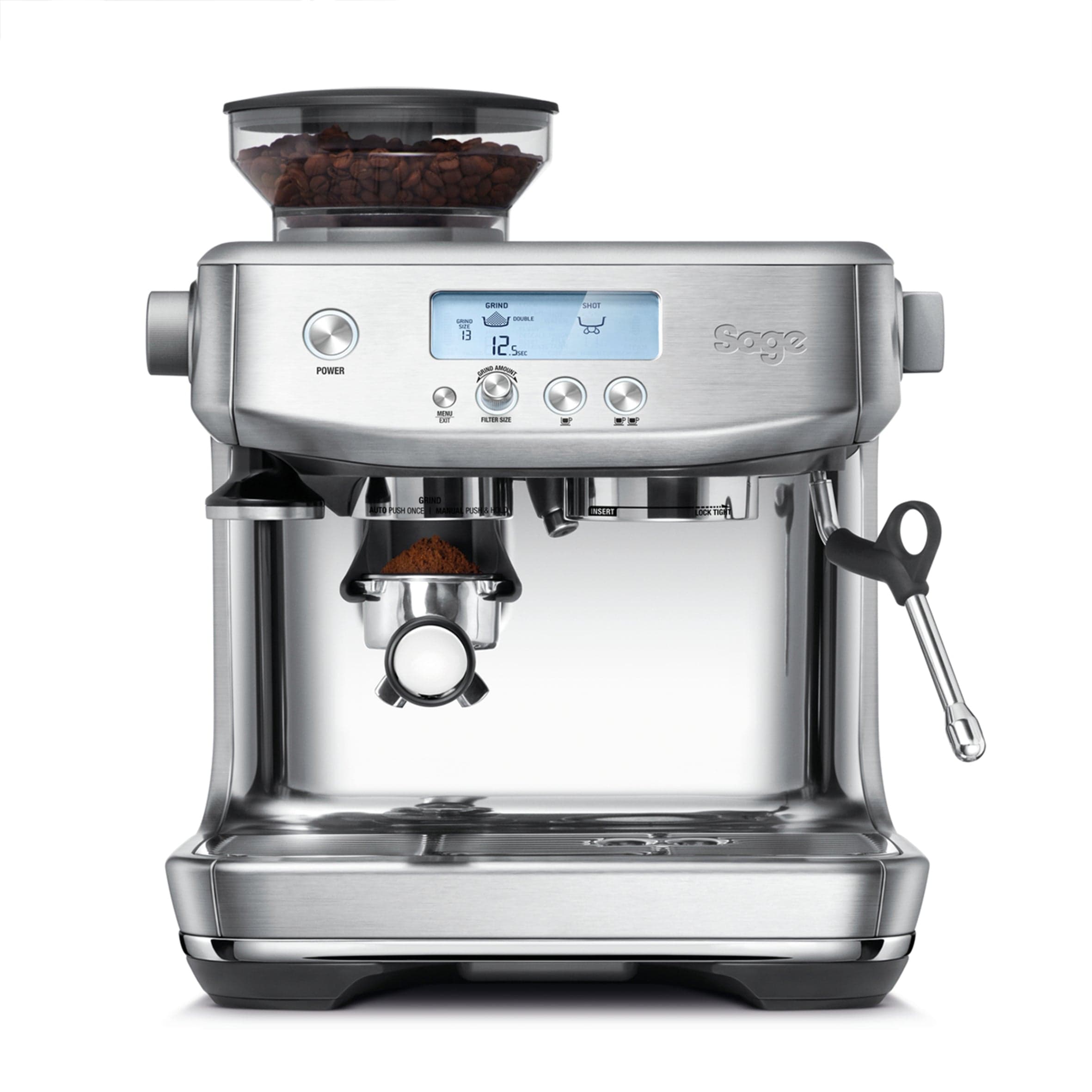
Barista Express vs Barista Pro
Express
- cheaper;
- pressure gauge;
- classic design;
- proven platform.
Pro
- ThermoJet;
- 30 grind settings;
- faster workflow;
- more modern LCD.
At similar prices we'd favour Pro.
At a large discount, Express fights back strongly.
BARISTA EXPRESS VS BARISTA PRO
Sage Barista Express
8.9/10 editorial score
- Built-in grinder
- Yes
- Portafilter
- 54mm
- Milk
- Manual steam wand
Barista Express vs Ninja Luxe Café
Ninja demonstrates how much the beginner market has changed.
It can help with:
- grind selection;
- dosing;
- tamping;
- milk.
It also makes filter and cold coffee.
Barista Express gives you a more traditional espresso education.
If you want help, Ninja.
If you want to learn manually, Sage.
BARISTA EXPRESS VS NINJA LUXE CAFÉ
Sage Barista Express
8.9/10 editorial score
- Built-in grinder
- Yes
- Portafilter
- 54mm
- Milk
- Manual steam wand
Ninja Luxe Café Premier
9.3/10 editorial score
- Built-in grinder
- Yes — 25 settings
- Built-in scale
- Yes
- Milk system
- Automatic Dual Froth System
Barista Express vs Bambino Plus + Grinder
This is a comparison more buyers should make.
Instead of buying one integrated machine, you could buy:
Bambino Plus + separate grinder.
Advantages include:
- upgradeable grinder;
- compact espresso machine;
- automatic milk on Bambino Plus;
- more flexible long-term setup.
Barista Express counters with:
- everything integrated;
- neater purchase;
- simpler setup;
- often excellent bundle value.
There's no universal answer.
BARISTA EXPRESS VS BAMBINO PLUS
Sage Barista Express
8.9/10 editorial score
- Built-in grinder
- Yes
- Portafilter
- 54mm
- Milk
- Manual steam wand
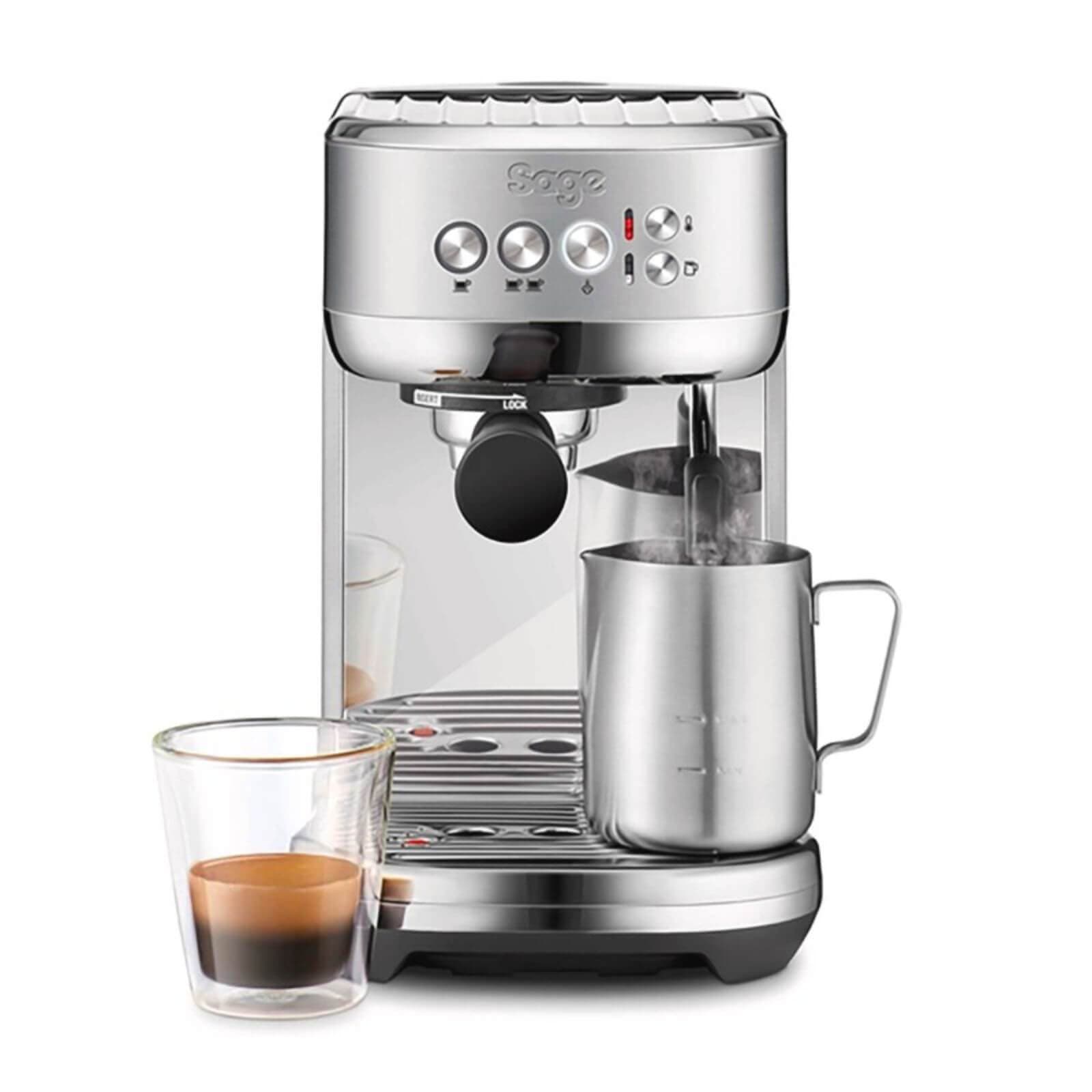
Sage Bambino Plus
9.2/10 editorial score
- Built-in grinder
- No
- Portafilter
- 54mm
- Water tank
- 1.9 litres
Cleaning
Manual espresso creates daily work.
Expect to:
- knock out coffee pucks;
- rinse the basket;
- clean the portafilter;
- wipe and purge the steam wand;
- empty the drip tray;
- clean the group head;
- maintain the grinder;
- run cleaning cycles;
- descale when required.
It's considerably more work than Nespresso.
That's the price of using fresh coffee manually.
Is Barista Express Good for Beginners?
Yes — if the beginner wants to learn.
That's an important qualification.
If you want a machine to prevent most beginner mistakes, Express Impress or Ninja Luxe Café is easier.
If you want to understand why your espresso tastes different when you change grind size, Barista Express remains an excellent teacher.
Who Should Buy Barista Express?
Buy it if:
- you find a strong discount;
- you want to learn espresso;
- you want grinder and machine together;
- manual milk appeals;
- you like the pressure gauge;
- you want a proven platform.
Who Shouldn't Buy It?
Look elsewhere if:
- you want automatic milk;
- tamping sounds irritating;
- you want rapid ThermoJet heating;
- you want guided preparation;
- the price is close to newer Sage machines.
Is Barista Express Still Worth It in 2026?
Absolutely — at the right price.
That's the crucial qualification.
Its espresso capability hasn't suddenly become worse because newer machines exist.
What's changed is the amount of assistance available elsewhere.
So we'd no longer automatically buy Express at full price.
But find it heavily discounted and the equation changes dramatically.
A proven espresso machine and capable grinder in one package can still represent outstanding value.
Final Verdict
Barista Express has become a modern classic.
Not because it's the easiest.
It isn't.
Not because it's the newest.
Definitely not.
It's endured because the fundamental proposition remains excellent:
fresh beans + real espresso + integrated grinder + manual milk + one machine.
Newer machines reduce the learning curve.
Barista Express asks you to climb it.
For the right buyer — particularly at a strong sale price — that's still a very good thing.
Coffee Machine Reviews Score: 8.9/10
Value When Discounted: 9.4/10
Best for: Learning traditional home espresso without buying a separate grinder.
Sage Barista Express
Retailer prices can change. Search current listings for this machine.
Find retailer pricesFAQs
Is Sage Barista Express bean-to-cup?
No. It has an integrated grinder, but espresso preparation is manual and uses a portafilter.
Does Barista Express have a grinder?
Yes. It includes an integrated conical burr grinder.
Does Barista Express tamp automatically?
No. Tamping is manual.
Does Barista Express froth milk automatically?
No. It uses a manual steam wand.
What size portafilter does Barista Express use?
It uses Sage's 54mm portafilter.
Does Barista Express have PID?
Yes. It uses digital temperature control for espresso extraction.
Is Barista Express better than Express Impress?
Express Impress is easier because it assists with dosing and tamping. Original Express can represent better value and gives you a more manual learning experience.
Is Barista Express still worth buying?
Yes, particularly when discounted significantly below newer Sage machines. Its fundamental espresso capability remains strong.